
First Timer’s Guide to Agile Mobile Development: Exploring the different phases of mobile app development
Learn moreSwipe to Check More
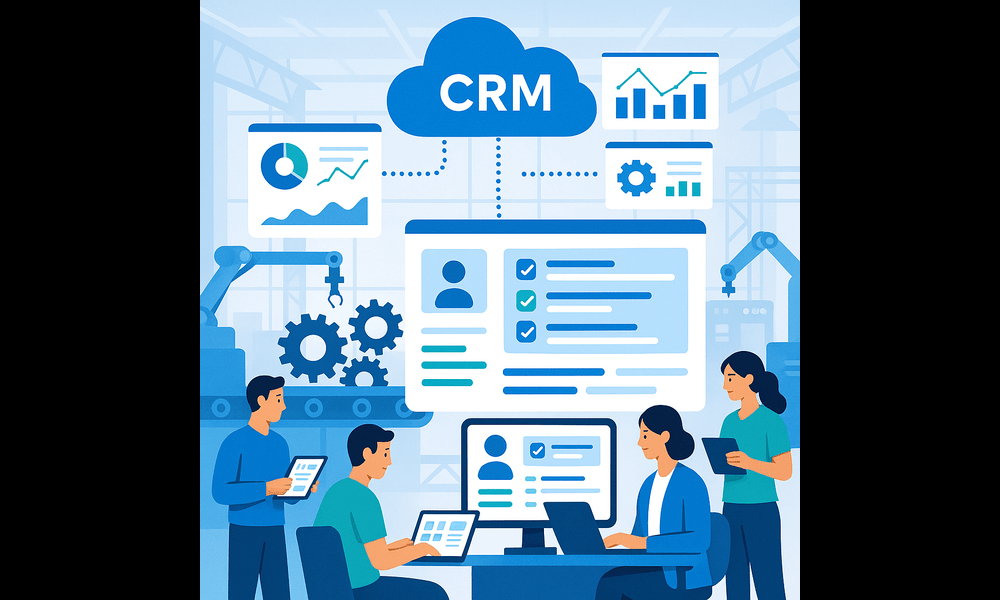

In today’s competitive manufacturing industry, managing customer relationships efficiently is more important than ever. Manufacturers face unique challenges, including complex supply chains, inventory management, sales tracking, and customer service. A well-designed CRM Software development company for manufacturing can provide solutions tailored to meet these specific needs.
Implementing a custom CRM system allows manufacturers to streamline operations, improve production planning, and maintain long-lasting customer relationships. Without the right CRM, businesses risk inefficiencies, lost opportunities, and a decrease in overall productivity. That’s why choosing the right CRM development company for manufacturing is crucial to ensure that your operations remain smooth and profitable.
By leveraging manufacturing CRM solutions, companies can automate repetitive tasks, improve data visibility, and enhance decision-making. From tracking leads to optimizing the supply chain, the right CRM software for manufacturers can be a game-changer.
Before hiring a CRM development company for manufacturing, it’s essential to assess your business requirements. Every manufacturing company has unique processes, and understanding them helps in selecting the right solution.
Identify gaps in your current workflow, from sales to production management. Are there bottlenecks in order tracking or delays in responding to customer queries? These insights help your CRM partner design a system that addresses your pain points.
Outline your objectives for CRM implementation. Do you want to improve lead management, automate inventory tracking, or integrate with your ERP system? Clearly defined goals make it easier to evaluate a CRM company’s expertise.
Using CRM implementation for manufacturing ensures that your business achieves efficiency and accuracy in operations. A solution that aligns with your requirements will ultimately provide a higher ROI and improve customer satisfaction.
One of the most critical factors when hiring a CRM development company for manufacturing is their experience in the industry. Companies familiar with manufacturing CRM solutions understand the unique challenges of production, supply chain management, and client interactions.
Always review the CRM company’s past projects. Check for case studies or client testimonials specific to manufacturing. This gives insight into their capability to handle complex manufacturing workflows.
A company with expertise in manufacturing will know how to integrate CRM with ERP systems, optimize production schedules, and automate reporting processes. The best CRM development company understands the nuances of CRM software for manufacturers and can deliver a solution that enhances operational efficiency.
Manufacturing businesses require solutions that are flexible and customizable. Off-the-shelf CRM systems often fail to meet specific industry requirements. That’s why a CRM development company for manufacturing should provide tailored solutions.
Look for a CRM system that can handle production planning, inventory management, automated notifications, and sales forecasting. Customized features help manufacturers gain better visibility into their operations.
Your business will grow, and your CRM system should be able to scale accordingly. A good CRM partner ensures that the solution evolves with your business without causing operational disruptions.
Custom CRM for manufacturing improves efficiency by aligning software functionality with real-world production needs. It ensures that every aspect of your manufacturing process is supported, from order processing to customer management.
The technology stack of a CRM solution is a key factor in its effectiveness. A modern CRM development company for manufacturing should offer cloud-based, AI-enabled, and mobile-friendly solutions.
Integration with ERP systems, supply chain management tools, and other software ensures data consistency and avoids duplication. This makes processes smoother and reduces errors.
Look for advanced features such as AI analytics, IoT integration, and automation tools. These help manufacturers anticipate demand, optimize production, and manage resources efficiently.
With the right manufacturing CRM solutions, companies can achieve enhanced operational efficiency, better inventory control, and improved customer engagement.
Before finalizing a CRM development company for manufacturing, it’s essential to evaluate the costs involved. Some companies offer fixed pricing, while others may charge subscription fees.
Compare pricing models and services offered by different CRM providers. Consider long-term maintenance and upgrades in your budget.
A CRM system should deliver measurable results. Track improvements in operational efficiency, reduced errors, increased sales, and enhanced customer satisfaction to ensure a positive return on investment.
Investing in the best CRM development company ensures that your manufacturing business sees tangible benefits in productivity and profitability.
A robust CRM development company for manufacturing provides ongoing support and training to ensure smooth adoption.
24/7 support is critical to address any technical issues promptly. Check for service level agreements (SLA) that guarantee response times.
Effective CRM training ensures your team can leverage the system to its full potential. Proper onboarding reduces resistance to change and enhances productivity.
CRM software for manufacturers requires not just implementation but continuous guidance to adapt to evolving business processes.
Data security is a major concern for manufacturers, especially with sensitive client information and proprietary production data. Hiring a CRM development company for manufacturing that follows industry compliance standards is essential.
Ensure the CRM system uses advanced encryption protocols to protect data from cyber threats.
Check for GDPR, ISO, and other relevant standards. Compliance ensures your manufacturing business avoids legal issues while safeguarding critical data.
A secure manufacturing CRM solution protects both your operations and customer trust.
Evaluating a CRM company’s reputation can save time and reduce risks. Look for reviews, ratings, and case studies from other manufacturing clients.
Successful CRM implementation stories indicate reliability and expertise. Check platforms like Clutch, LinkedIn, or Google reviews to get authentic feedback.
Hiring a CRM development company for manufacturing with proven results ensures that you invest in a trusted partner who can deliver measurable improvements.
Selecting the right CRM development company for manufacturing is a critical decision that can determine the efficiency, productivity, and growth of your business. Focus on your business needs, industry expertise, customization capabilities, technology stack, cost, support, and security.
A well-implemented manufacturing CRM solution streamlines operations, improves customer satisfaction, and drives business growth. Take time to evaluate options, check references, and choose a company that aligns with your manufacturing goals.
Investing in the best CRM development company ensures that your manufacturing business is prepared for future challenges while maximizing operational efficiency and profitability.
A custom CRM solution helps manufacturers streamline operations, manage inventory efficiently, and improve customer relationship management. It ensures that workflows are tailored to the unique needs of the manufacturing industry.
Look for industry experience, expertise in manufacturing CRM solutions, customization capabilities, integration with ERP systems, data security, and ongoing support.
Costs vary depending on project complexity, features, and customization. Some companies offer fixed pricing, while others charge monthly or annual subscription fees. Always compare ROI against costs.
Yes, the best CRM development company for manufacturing ensures seamless ERP integration. This improves data consistency, eliminates duplication, and streamlines production and sales processes.
Implementation time depends on business size, customization level, and system complexity. On average, it takes 3–6 months for full deployment with training and support.
CRMs improve lead management, sales tracking, inventory monitoring, customer engagement, and reporting. They increase efficiency, reduce errors, and enhance decision-making.
A reliable CRM development company ensures data security with encryption, compliance with GDPR and ISO standards, and robust access control, protecting sensitive business and customer data.
Yes, by automating communication, tracking orders, and providing better support, a CRM ensures timely responses and personalized service, improving overall customer satisfaction.
Cloud-based CRMs offer scalability, remote accessibility, real-time updates, and easier maintenance. They are ideal for modern manufacturers looking for flexibility and advanced features.
Track improvements in operational efficiency, sales growth, customer retention, and reduced manual errors. A well-implemented manufacturing CRM solution should provide clear, measurable benefits.