First Timer’s Guide to Agile Mobile Development: Exploring the different phases of mobile app development
Learn moreSwipe to Check More
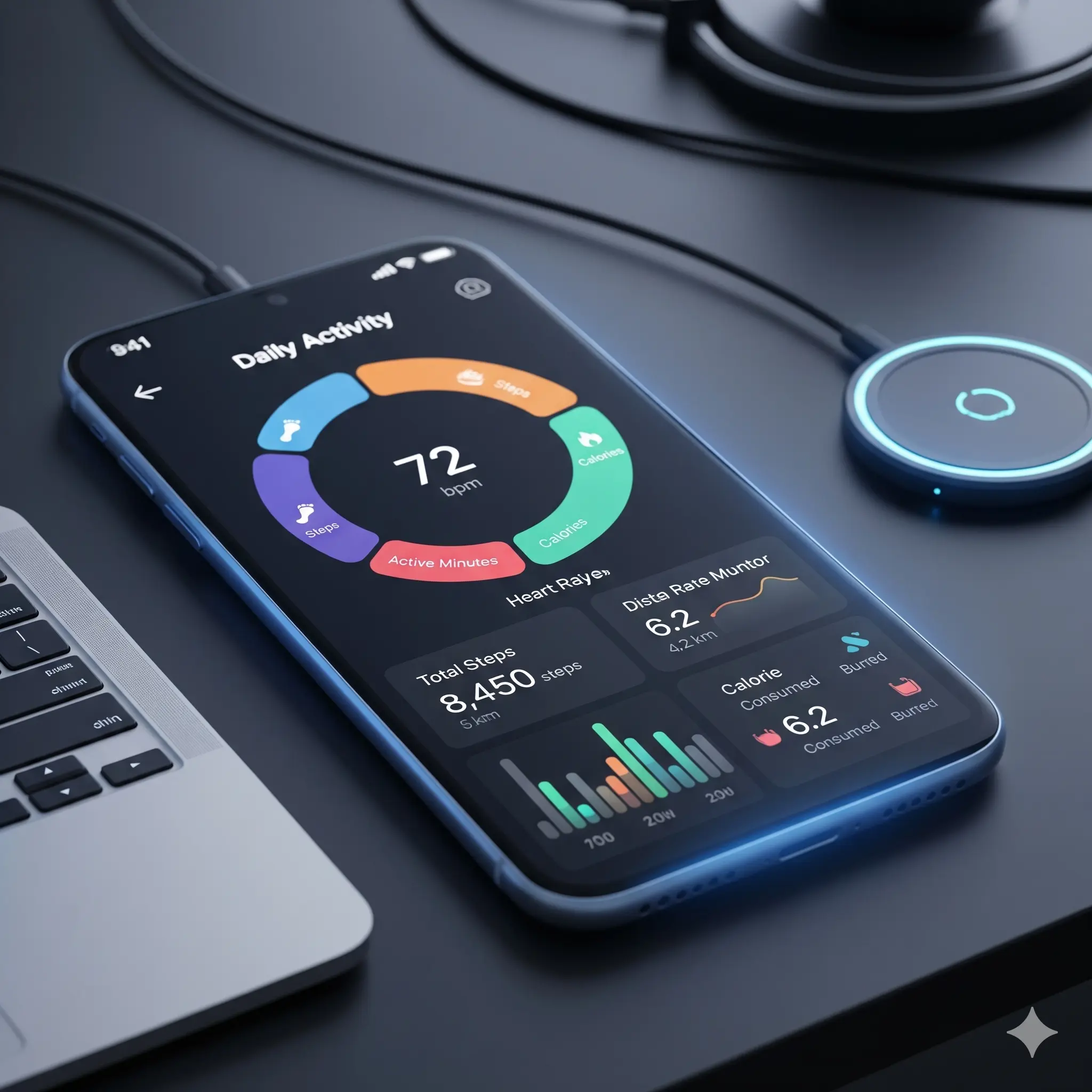

The fitness industry has seen a massive transformation with the rise of health-tracking apps like Fitbit, Garmin, and MyFitnessPal. These apps help users monitor their daily activities, track calories, and stay motivated to achieve their health goals. With more people focusing on wellness and digital fitness, building a feature-rich fitness app can be a profitable business opportunity.
If you are planning to launch your own fitness tracking solution, partnering with a Mobile App Development Company in India can help you access skilled developers at a cost-effective price.
For startups and businesses, hiring a professional Fitness App Development Company ensures that your app is designed with the right features, scalable architecture, and smooth user experience to compete with industry leaders like Fitbit.
Fitness apps are no longer a luxury — they have become a daily necessity for millions of users worldwide. Let’s explore why building a Fitbit-like fitness app is a smart business decision.
According to market research, the global fitness app market is projected to surpass USD 30 billion by 2030, growing at a CAGR of nearly 20%. This demand is driven by rising health consciousness, wearable device adoption, and the shift towards digital wellness solutions.
Today’s users prefer digital-first fitness solutions that are accessible anywhere, anytime. Apps like Fitbit provide gamification (badges, challenges), AI-powered coaching, and real-time tracking — making them engaging and habit-forming.
Building a successful fitness app is all about offering features that motivate users and make fitness tracking fun. Whether you are planning a simple step-counter app or a full-scale health monitoring platform, you need to add the right set of functionalities to keep users engaged. Collaborating with a professional Mobile App Development Company in Delhi can help you design a feature-rich solution that is scalable and user-friendly.
Here are the must-have features you should consider:
Allow users to create personalized profiles with their basic details — age, weight, gender, and fitness goals. Smooth onboarding with social media sign-in or email login ensures a frictionless start.
Track steps, heart rate, calories burned, sleep patterns, and workouts in real time. This is the core feature that keeps users motivated by showing progress visually.
Enable users to set daily, weekly, and monthly fitness goals. A progress dashboard with charts and stats helps them measure success over time.
Gamify the experience by allowing users to share achievements with friends, join groups, and participate in challenges. Social engagement keeps users motivated for the long term.
Send timely reminders for workouts, hydration, and step goals. Personalized push notifications improve user retention and engagement.
Allow seamless sync with devices like Fitbit, Apple Watch, Garmin, and other smart wearables. This improves data accuracy and creates a connected experience.
Introduce badges, leaderboards, and fitness challenges to encourage consistency. Rewarding users for achieving milestones makes fitness fun.
Choosing the right technology stack is crucial for ensuring your fitness app runs smoothly, handles real-time data, and remains scalable as your user base grows. A well-planned tech stack helps deliver a seamless user experience, secure data storage, and easy integration with wearables and third-party APIs.
Partnering with an experienced Mobile App Development Company in Noida can help you select the right tech stack based on your app’s features, budget, and performance requirements.
Here’s a recommended technology stack for developing a Fitbit-like fitness app:
The frontend is what users interact with, so it must be fast, responsive, and visually appealing.
The backend handles data processing, authentication, and app logic.
Fitness apps require integration with APIs to fetch accurate health and activity data.
Since health data is sensitive, implementing strong security measures is a must.
Building a Fitbit-like app requires proper planning, execution, and testing to ensure it delivers a smooth experience for users. Here’s a clear step-by-step roadmap to help you understand how fitness app development works:
Before writing a single line of code, study the fitness app market, identify your target audience, and analyze competitors like Fitbit, MyFitnessPal, and Strava. This helps you find gaps in the market and define your unique value proposition.
Decide which features are essential for your app — step tracking, calorie counting, wearable integration, or gamification. Create wireframes (visual blueprints) to map out user journeys and ensure a seamless app flow.
Focus on creating a clean, intuitive, and visually appealing interface. Use simple navigation, motivational visuals, and engaging dashboards to keep users hooked.
Thoroughly test your app for bugs, crashes, and performance issues. Test across multiple devices and OS versions to ensure a smooth experience for every user.
Once testing is done, publish your app on Google Play Store and Apple App Store. Make sure to follow each platform’s guidelines for approval.
Your work doesn’t end after launch. Regularly release updates, add new features, fix bugs, and analyze user feedback to keep the app competitive and engaging.
One of the most common questions businesses ask before starting development is — “How much does it cost to build a fitness app like Fitbit?”
The cost can vary significantly based on app complexity, features, platforms (iOS, Android, or both), and development team location.
Here’s a rough distribution of the development budget:
? Pro Tip: Start with an MVP version of your fitness app to test the market, then scale up as you get user feedback. This saves cost and minimizes risk.
Building a fitness app is not just about tracking steps — it’s also about creating a profitable business model. Here are some proven monetization strategies you can use to make your Fitbit-like app financially successful:
Offer a basic version of your app for free, but keep premium features behind a paywall.
Monthly, quarterly, or annual subscription plans work well for fitness apps.
Sell additional features, digital products, or training plans inside the app.
Allow relevant brands (health supplements, gyms, wellness brands) to advertise inside your app.
Offer your app as a B2B solution for companies that want to improve employee health.
Developing a fitness app like Fitbit is exciting, but it comes with its own set of challenges. Understanding these challenges beforehand can save time, reduce cost, and improve user satisfaction.
Fitness apps collect sensitive data like heart rate, location, and sleep patterns. Mishandling this information can lead to privacy breaches.
Solution:
Users expect precise tracking of steps, calories, and heart rate. Inaccurate readings can lead to dissatisfaction and app abandonment.
Solution:
Many fitness apps see high initial downloads but struggle to retain users over time.
Solution:
Ensuring compatibility with multiple devices can be technically challenging.
Solution:
As your user base grows, the app must handle increased traffic and data processing.
Solution:
The fitness app industry is evolving rapidly with technology advancements and changing user expectations. Staying updated with trends is essential if you want your app to remain competitive and engaging. Here are some key trends shaping the future of fitness apps:
Artificial Intelligence is transforming how users achieve fitness goals. Apps now use AI algorithms to create personalized workout and diet plans based on user activity, preferences, and performance.
Benefit: Highly customized plans increase user engagement and improve results.
Augmented Reality (AR) and Virtual Reality (VR) are becoming popular in fitness apps, offering immersive workouts and gamified fitness experiences.
Example: Virtual cycling through scenic routes or interactive yoga sessions in a virtual studio.
Benefit: Makes workouts more engaging and fun, increasing long-term retention.
Wearables like Fitbit, Apple Watch, and smart home gym equipment continue to gain popularity. Future apps will seamlessly integrate with IoT devices to track real-time health data and provide actionable insights.
Benefit: Users get a connected and holistic fitness experience.
Gamification remains a strong trend to boost user motivation. Apps will increasingly use social challenges, leaderboards, and reward systems to engage users.
Benefit: Builds community, improves retention, and encourages consistent usage.
Advanced analytics will help apps predict user behavior, recommend improvements, and provide actionable insights for better health outcomes.
Benefit: Users receive intelligent suggestions, enhancing the app’s perceived value and usefulness.
Fitness apps are now expanding beyond physical activity to include mental health features like meditation, stress tracking, and sleep analysis.
Benefit: Provides a holistic wellness solution, attracting more users and improving overall engagement.
Developing a fitness app like Fitbit is a challenging yet rewarding venture. From understanding market trends and defining key features to choosing the right tech stack, handling development, and implementing effective monetization strategies — every step plays a crucial role in creating a successful app.
By following a structured approach, considering the future trends in AI, AR/VR, and wearable integrations, and addressing challenges like data privacy and user engagement, you can build a fitness app that not only attracts users but also keeps them engaged for the long term.
Whether you are a startup, entrepreneur, or established business, creating a feature-rich fitness app can be a profitable opportunity in today’s health-conscious world.
Call to Action: Are you ready to turn your fitness app idea into reality? Partner with an experienced development team to create a scalable, engaging, and innovative fitness app that stands out in the market.
The cost varies depending on features, platforms (iOS, Android, or both), and complexity. A basic MVP can cost around $25,000–$40,000, while a full-featured app like Fitbit may range from $50,000 to $120,000+. Enterprise-level solutions with AI, wearable integration, and advanced analytics can exceed $150,000.
Key features include user profiles, real-time activity tracking, goal setting, progress dashboards, social sharing, wearable integration, push notifications, gamification, and personalized workout/diet plans.
Recommended stack includes:
Common monetization strategies include:
Common challenges include data security & privacy, accurate activity tracking, user engagement & retention, wearable device integration, and app scalability. These can be mitigated with encryption, API integration, gamification, cloud hosting, and thorough testing.
Future trends include AI-powered personalized workouts, AR/VR fitness experiences, integration with smart wearables and IoT devices, gamification & social challenges, advanced data analytics, and mental wellness features.